


Are HP Tuners Custom Calibration Services Worth It?
Last Updated: November 22, 2026
Quick Summary
HP Tuners custom calibration services are worth it when you budget the full cost stack: the RTD device at $299.99, credits at $49.99 each, and the calibration fee itself, from $300.00 for GM LS/LT to $450.00 for Ford Mustang. They suit bolt-on cars and daily drivers, while heavily modified builds need dyno verification.
- Many vehicles need two credits for the ECM/PCM alone, and credits are non-refundable once purchased.
- Remote tuning suits mild builds, daily drivers, and owners far from a competent tuner.
- Email tuning tiers are $300.00 GM LS/LT, $400.00 Mopar/HEMI, and $450.00 Ford Mustang.
- Files are typically sent within one to seven business days during weekday hours.
- We cannot tune to accommodate modifications that delete factory emissions equipment on any vehicle.
Table of Contents
- What HP Tuners Custom Calibration Services Actually Include
- Remote vs. Dyno Calibration: Which Approach Fits Your Build
- HP Tuners Calibration Pricing: What You Pay and Why
- How to Prepare Your Vehicle Data for Remote Tuning
- Vetting a Calibration Provider: Safety and Accountability Criteria
- What to Expect: Turnaround, Revisions, and Communication
- Emissions, Warranty, and Legal Limits You Need to Know
- Getting Started with Taylor'd Tuning
- Frequently Asked Questions
What HP Tuners Custom Calibration Services Actually Include
HP Tuners custom calibration services are professional tuning packages that use HP Tuners hardware and software to read, edit, and write calibration files on a vehicle's control modules. At Taylor'd Tuning, we sell and support these services across GM, Ford, and Stellantis platforms.
A calibration service is not a single file. It is a process: baseline data collection, calibration adjustments to the engine control module and often the transmission control module, log review, and revision rounds. The HP Tuners supported vehicle list defines which control modules can be licensed, and that list, not the sales page, is what determines whether your build is tunable at all.
Hardware, Credits, and the Real Cost Stack
Three costs stack before a tuner writes a single line of calibration. The hardware interface comes first: our HP Tuners RTD remote tuning device runs $299.99 and handles identify, read, and write duties through the OBD-II port, with full VCM Scanner support for diagnostics, trouble codes, and data logging.
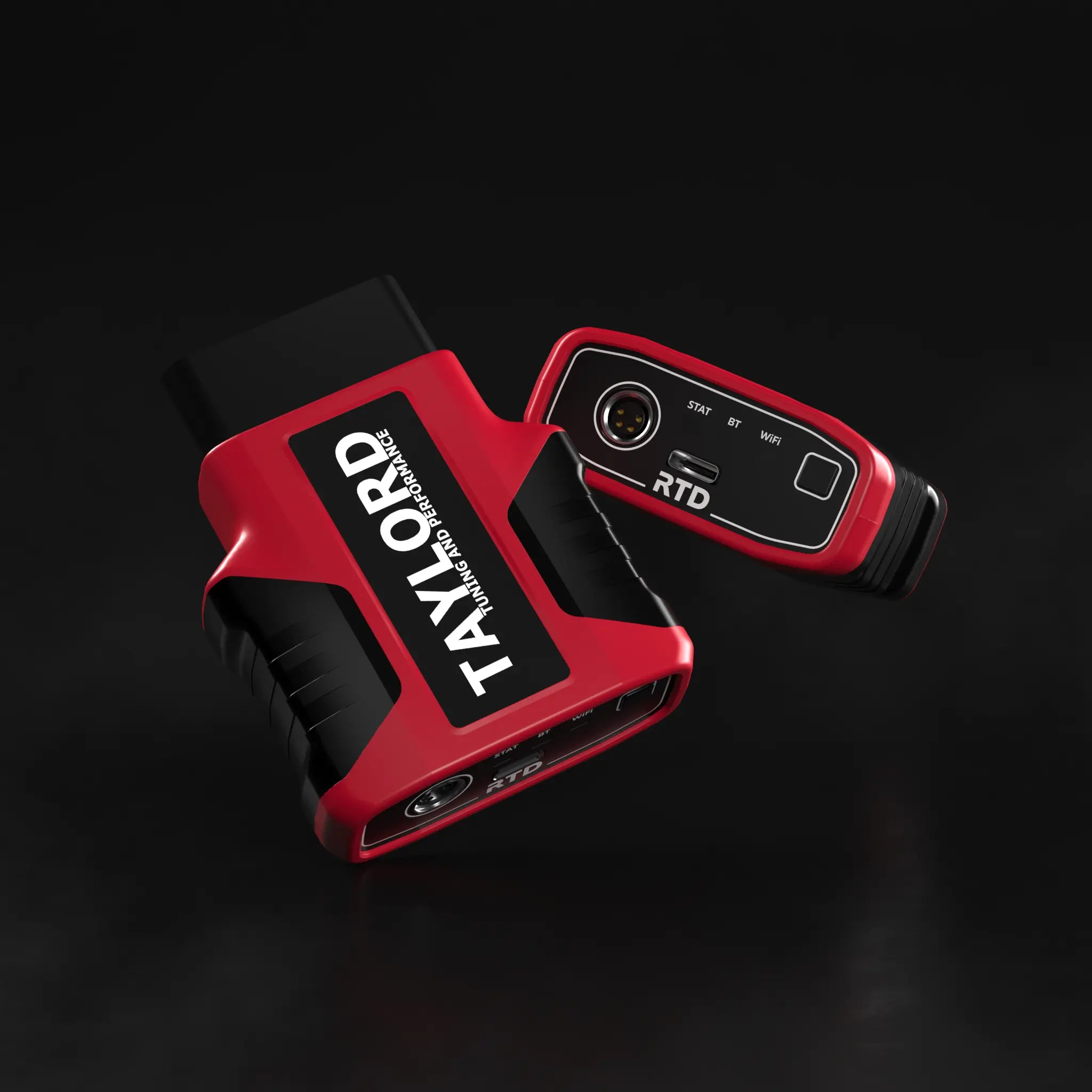
Credits come second. Module licensing is credit-based, and many vehicles need two credits for the ECM/PCM alone, with extra credits for a TCM or other modules. Our HP Tuners universal credits sell for $49.99 each. Credits are non-refundable once purchased, so count what your vehicle needs before checkout.

The calibration service itself is the third line item. A common mistake is budgeting for the tune and forgetting the hardware and licensing, then discovering the total mid-process.
Remote vs. Dyno Calibration: Which Approach Fits Your Build
Remote calibration is convenient and lower in cost, while dyno calibration offers controlled load conditions. The right choice depends on how far your build has moved from stock.
Remote tuning works by email. You flash a base file with your RTD device, log real-world driving, send the log, and receive a revised calibration. It suits bolt-on cars, daily drivers, and owners far from a competent tuner. If that describes you, our guide on how to book a professional dyno tuning session explains what changes when you want load-bearing verification instead.
Dyno calibration holds the engine at controlled load and speed so fueling, timing, and boost can be measured rather than inferred.
Best for remote: mild builds, wide geography, budget discipline. Skip remote if: you have changed forced induction or internals and have no verified fueling data.
HP Tuners Calibration Pricing: What You Pay and Why
Published pricing lets you see costs before you commit. Our email tuning tiers are flat and listed: LS and LT GM platforms at $300.00, Mopar and HEMI platforms at $400.00, and Ford Mustang at $450.00. Hardware and credits sit outside those figures and are purchased separately.
Why the spread? Platform complexity. Advanced setups, non-stock injectors, and extreme power goals can add fees.
The Full Cost Stack, Not Just the Tune Fee
Most listings quote only the calibration fee, which is why owners get surprised mid-process. Build your budget from every line item that can appear on an HP Tuners custom calibration job:
- Interface hardware. Our RTD remote tuning device runs $299.99 and is a one-time purchase you keep across vehicles.
- Module credits. Universal credits sell for $49.99 each. Many vehicles need two credits for the ECM/PCM alone, with extra credits for a TCM or other modules. Credits are non-refundable once purchased.
- Calibration service. The platform tiers above: $300.00 GM LS/LT, $400.00 Mopar/HEMI, $450.00 Ford Mustang.
Platform-by-Platform Service Tiers
| Platform | Email Tuning | Hardware | Credits | Notes |
|---|---|---|---|---|
| GM LS/LT | $300.00 | RTD $299.99 | $49.99 each | Covers LSX/LTX, Camaro, Corvette, Silverado |
| Mopar/HEMI | $400.00 | RTD $299.99 | $49.99 each | Charger, Challenger, Hellcat, TRX, Trackhawk |
| Ford Mustang | $450.00 | RTD $299.99 | $49.99 each | V6 through GT500, S650 2024+ supported |
Email Tuning
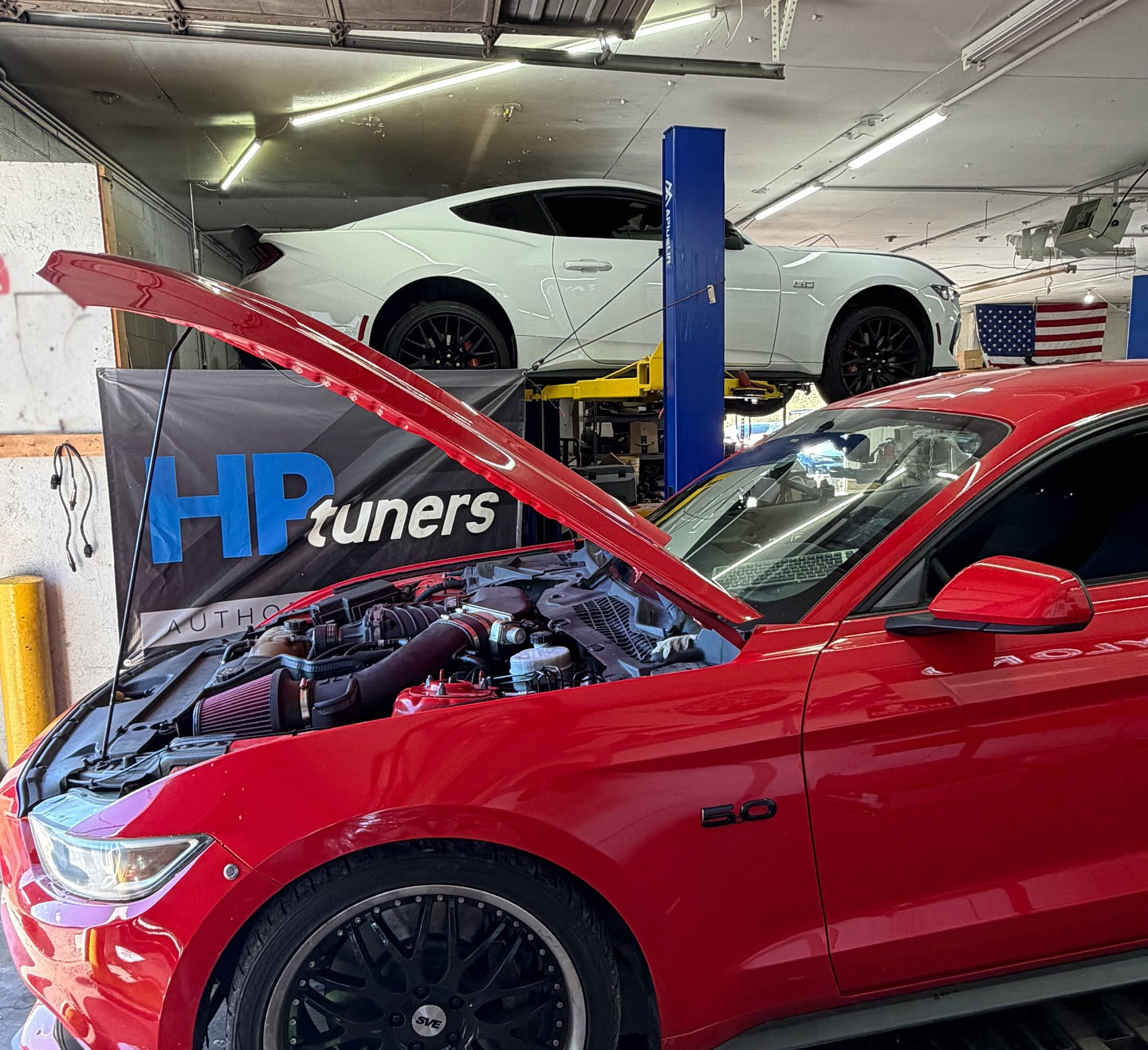
For a concrete example of the Ford package, see our Mustang email tuning with the HP Tuners RTD.
Watch out: credits are consumed when a module is licensed, not when a file is written, so a change of plans after licensing does not return that money.
How to Prepare Your Vehicle Data for Remote Tuning
Gather the following before you email a tuner: your current tune file, a complete modification list, your fuel type, and clean data logs.
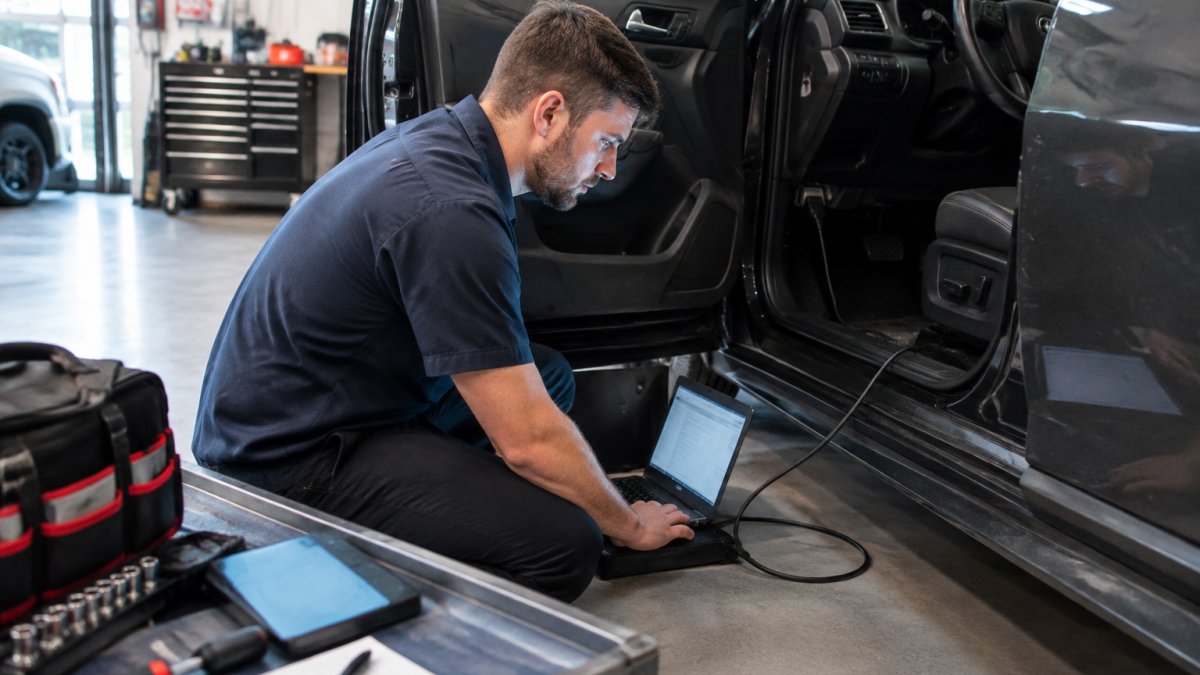
Work through this checklist before sending anything:
- Read and save your stock or current calibration file with the RTD device
- Confirm how many credits your ECM, TCM, and any other modules require
- List every modification: intake, exhaust, injectors, cam, turbo, fuel system
- Install a wideband if your platform lacks a factory unit; some applications require an AEM X Series
- Log at least one clean idle and part-throttle pull on a safe road
- Note fuel octane and any ethanol content
- Write down the exact symptom you want fixed, not just "more power"
Repeated messages can push your file further back in the queue, so send your information once, completely.
Vetting a Calibration Provider: Safety and Accountability Criteria
Ask three questions before you pay anyone: what happens when a tune goes wrong, how are revisions handled, and does the provider understand your aftermarket parts. A tuner who cannot answer all three in writing is a risk to your engine.
Compare Service Models Side by Side
Before comparing individual shops, compare the service models themselves. Each has a different cost, risk, and fit profile:
| Service model | What you get | Typical fit | Main trade-off |
|---|---|---|---|
| Remote email calibration | Base file, street logs, emailed revisions | Bolt-on cars, daily drivers, owners far from a tuner | Relies on your logging quality; no controlled load |
| Dyno calibration | Controlled load and speed, measured fueling and timing | Built motors, forced-induction changes, track goals | Higher cost and travel; dyno time billed separately |
| In-person street calibration | Tuner rides along and logs real conditions | Mild to moderate builds near a shop | Limited by safe road access and weather |
| Bench/off-vehicle service | Module unlocked and calibrated outside the car | Platforms that require unlock or bench work | Vehicle downtime and shipping |
Use the table to narrow the model first, then compare providers inside that model. A remote provider and a dyno shop are not competing on the same axis, and judging one by the other's criteria produces a bad decision.
Provider Verification Checklist
Ask for each of the following in writing before committing:
- A documented process for reading your baseline data before writing anything
- Clear revision terms and how many rounds are included
- Willingness to explain the calibration adjustments in your file
- A stated position on emissions compliance, in writing
- Evidence of experience on your specific platform and control module, not just the brand
- A named contact and a stated response window
- A policy for what happens if the vehicle runs poorly after a revision
EPA emissions rules for motor vehicles are not optional reading. Any provider who offers to tune out factory emissions equipment is exposing you to legal and resale risk.
Watch out: a provider who will not put revision terms and emissions stance in writing is telling you how the relationship will go when something goes wrong.
What to Expect: Turnaround, Revisions, and Communication
Files are sent out in the order received, typically within one to seven business days during weekday hours, though workload can extend these times.
Communication runs by email. Stopping the tuning process once it has begun is not grounds for a refund, and emailed files cannot be returned once sent.
Emissions, Warranty, and Legal Limits You Need to Know
Emissions compliance is the line no legitimate calibration provider crosses. We cannot tune to accommodate modifications that delete factory emissions equipment on any vehicle, and you may experience a check engine light if you modify in such a way. That stance protects your vehicle and your wallet.
Warranty is the second limit. If your car is under factory warranty, consider how a tune may affect warranty coverage before you flash anything.
Getting Started with Taylor'd Tuning
Taylor'd Tuning brings 17+ years of tuning and modifying cars and trucks, with track-proven AWD and hub dyno capability and support for HP Tuners, Cobb, ECUTEK, Motec, and Haltech platforms. We tune Subaru, GTR, Mustang, and GM builds remotely and in person at our Nashville-area shop. You get expert guidance on parts selection, optimized performance through professional calibration, and access to the specialized devices and aftermarket parts the process requires.
Get started with Taylor'd Tuning and put a calibration behind your build that holds up under load.
Frequently Asked Questions
How much does it cost to use HP Tuners?
The total cost has three parts: the interface device, the credits to license your vehicle's control modules, and the calibration service itself. Taylor'd Tuning sells the RTD4 remote tuning device for $299.99, and universal credits start at $49.99. Most vehicles need two credits to license the ECM, and some need extra for the TCM or other modules. Calibration service pricing starts at $300 for LS email tuning and runs to $450 for Ford Mustang remote tuning.
What is the difference between remote tuning and dyno tuning?
Remote tuning sends calibration files back and forth by email while you log data on the street or track. Dyno tuning puts the car on a load-bearing dyno where a tuner can hold steady-state conditions and measure output directly. Remote tuning costs less and fits mild to moderate builds, while dyno tuning suits aggressive setups, forced induction changes, or anything where you need verified wide-open-throttle fueling and timing under controlled load.
How do HP Tuners credits and MPVI devices work?
Credits are the currency HP Tuners uses to license individual control modules. You buy credits, then spend them to license the ECM, TCM, or other modules on a specific vehicle. Licenses are tied to the VIN, PCM operating system, and PCM serial number, so once licensed, that vehicle stays tunable on that interface indefinitely. The MPVI3 and RTD4 devices are the hardware that connects VCM Suite or the RTD Flasher software to your vehicle's OBD-II port.
Is a custom HP Tuners calibration better than an off-the-shelf tune?
Off-the-shelf tunes assume a stock or near-stock combination. A custom calibration is built from your actual data logs, so it accounts for your specific intake, injectors, exhaust, fuel, and elevation. If you have bolt-ons, a cam change, or forced induction, a custom calibration is built to match your specific setup. For a completely stock daily driver, an off-the-shelf tune may be adequate, but it will not be optimized for your exact setup.
How do I know if my vehicle is compatible with HP Tuners?
HP Tuners publishes a supported vehicle list that shows which control modules can be read and written on each make, model, and year. Check that list before buying hardware or credits. If your combination is not listed or you are unsure, email the tuner with your VIN, modifications, and current tune file so they can confirm support before you spend money.
