


Is Performance Engine Tuning for Reliability Worth It?
Last Updated: November 19, 2026
Quick Summary
Performance engine tuning for reliability is worth it when the calibration is done carefully, because engines often fail from bad calibration rather than from good power. A custom tune built around your hardware, fuel, and goals adds safety margin, while a generic map or rushed peak-boost file removes it. Start with a health check and baseline logs before changing any tables.
- A compression and leak-down test within 10% across cylinders is a common pass threshold before tuning.
- Change one variable at a time, adjusting fuel first, then timing, then boost in small steps.
- Set stop conditions like fuel trims beyond plus or minus 10% and back out the last change when triggered.
- A dyno tuning session runs $850, excluding software ECU licenses, credits, and flashpoints.
- Validate each revision with both a dyno pull and a road log, since a clean pull can still knock after heat soak.
Table of Contents
- How Performance Engine Tuning Can Protect Reliability
- The Disadvantages of Tuning a Car You Need to Accept
- A Staged Reliability-First Tuning Workflow
- How Air-Fuel Ratio, Ignition Timing, and Heat Management Affect Longevity
- Car Tuner Software and Calibration Transparency
- What Engine Tune Cost Really Buys You
- Best Performance Engine Tuning for Reliability by Platform and Use Case
- Book a Dyno Session and Start With a Health Check
- Frequently Asked Questions
How Performance Engine Tuning Can Protect Reliability
Performance engine tuning for reliability sounds like a contradiction. More power usually means more stress, right? Not always.
Engines often fail from bad calibration rather than from good power, and careful calibration is the thing that protects them. This guide shows you how to tune for both.
Below, we'll show you the workflow we use, the trade-offs nobody mentions, and how to tell a real calibration from a copied file.
What Tuning Actually Changes in the Engine Control System
Your ECU runs on tables, not magic. Tuning edits those tables.
The main ones:
- Fuel tables set the air-fuel ratio (AFR) under load
- Ignition tables set when the spark fires
- Boost tables control turbocharging pressure
- Torque and load limits cap how hard the engine works
Change one, and you change the others. Add airflow with an intake upgrade, and the fuel table no longer matches reality. That mismatch is where engine stress starts.
Why a Custom Calibration Beats a Generic Map
A generic map assumes a stock engine. Yours isn't stock.
An off-the-shelf file is built for one set of parts and one fuel quality. Bolt on a downpipe or run different octane, and the safety margins shrink. A custom calibration is built around your sensor readings, your fuel, and your goals.
The difference shows up in drivability first, then in long-term reliability.
The Disadvantages of Tuning a Car You Need to Accept
Tuning has real costs, and pretending otherwise wastes your money. Here's the honest list.
- You take on more responsibility. A tuned car needs better fuel, more frequent checks, and attention to maintenance.
- Warranty coverage can be affected. Many manufacturers can flag a modified ECU.
- Emissions compliance is on you. We cannot tune around deleted emissions equipment, and doing so can trigger a check engine light.
- Bad parts fail faster. More power finds every weak clamp and tired injector.
- Cheap tunes cost more later. A bad calibration can damage an engine in ways that show up months down the road.
If you spot surging, knock, or unstable idle after a tune, that's a warning sign worth acting on. Our guide to the signs of a bad engine tune and how to diagnose them walks through what to check first.
A Staged Reliability-First Tuning Workflow
Rushing straight to peak boost is a common way engines get damaged. Staging the work means each gain can be measured and checked before moving on.
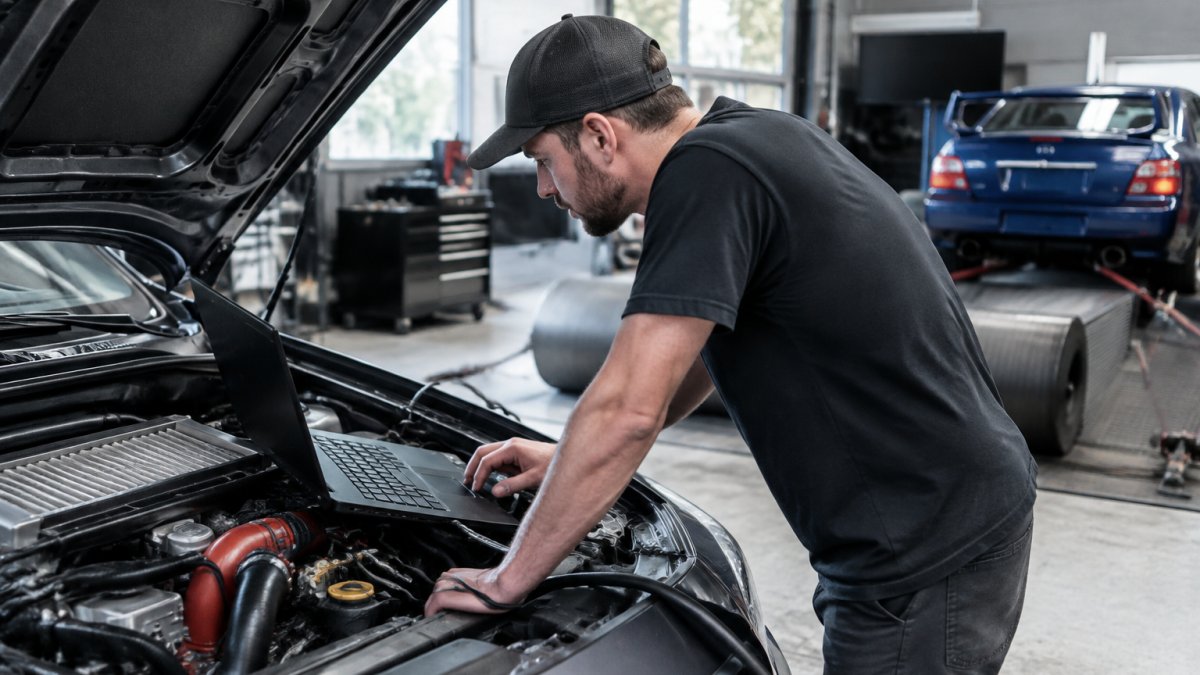
Stage one is health. Stage two is baseline. Stage three is calibration. Stage four is validation. Skip a stage and you're guessing.
Pre-Tune Engine Health and Maintenance Checklist
Before a single table changes, the engine has to be sound. Run this checklist first and record the results so you have a reference point later:
- Compression and leak-down test passed (within 10% across cylinders is a common pass threshold)
- Spark plugs correct heat range and gapped to manufacturer spec
- Fuel injectors clean and correctly sized for the target airflow
- Fuel pump and filter keeping up under load (check fuel pressure drop at wide-open throttle)
- Cooling system holding pressure, fans working, thermostat opening at spec
- No stored or pending trouble codes
- Boost leaks checked on turbo cars (a smoke test is the fastest way)
- Fresh oil and filter, and oil analysis if the engine has high mileage
A common mistake is tuning around a small mechanical fault. It never works. Fix the hardware first.
Watch out: a compression test that passes cold but fails hot can indicate a valve-seat or ring issue that only appears under load, so log coolant temperature and oil pressure during the baseline pull.
Baseline Calibration, Data Logging, and Road Testing
Baseline calibration means logging the car as it sits. You capture sensor readings, fuel trims, and knock behavior before making changes.
Data logging on the dyno and the road shows how the engine behaves under real load.
If you want a deeper walkthrough of building your own starting file, our guide on how to build a custom base map covers the process step by step.
Incremental Calibration and Stop Conditions
Calibration is where restraint pays. Change one variable at a time, log the result, and compare it to the previous log.
Set stop conditions before you start.
Watch out: a tune that looks clean on a single dyno pull can still knock on the road after heat soak, so validate each revision with both a dyno pull and a road log before moving on.
Post-Tune Validation and Ongoing Maintenance
Validation is not a single pull. It is a set of logs that cover cold start, idle, part throttle, wide-open throttle, and a heat-soak cycle.
After validation, set an inspection interval. Increased load changes service needs: spark plugs, oil, and filters wear faster, and a tuned engine benefits from more frequent log reviews.
If you spot surging, knock, or unstable idle after a tune, that's a warning sign worth acting on.
How Air-Fuel Ratio, Ignition Timing, and Heat Management Affect Longevity
Three variables decide whether your engine lasts: fuel mixture, spark timing, and temperature. Get them right and power becomes safe.
Air-fuel ratio is the mass of air versus fuel entering the engine.
Ignition timing controls when combustion starts. Too much advance builds cylinder pressure early and causes detonation.
Heat management ties it together.
For a detailed set of steps on preventing detonation, see our guide on how to avoid engine knock.
Car Tuner Software and Calibration Transparency
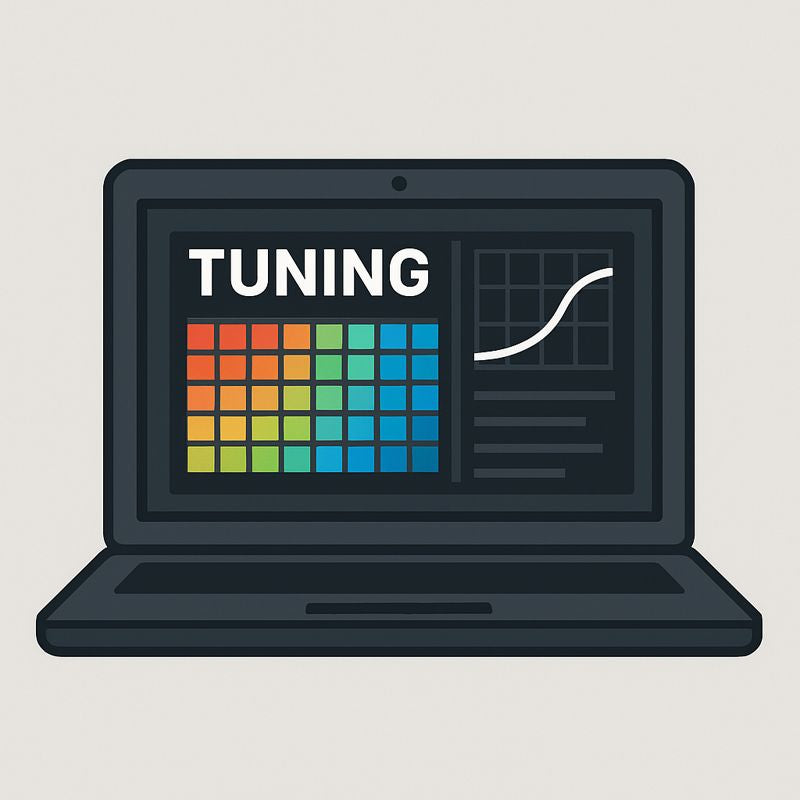
Car tuner software is the tool that edits the ECU calibration. The platform matters less than what the tuner does with it.
Taylor'd Tuning supports HP Tuners, Cobb, ECUTEK, Motec, and Haltech. Each platform has its own strengths.
Ask for the data. A transparent calibration comes with logs, revision notes, and a clear reason for every change.
If you want to understand the software side hands-on, our professional tuning consultation and one-on-one instruction lets you learn on your own vehicle with guidance.
What Engine Tune Cost Really Buys You
Engine tune cost varies widely, and the cheapest quote is rarely the best value. You're paying for time, data, and judgment.
A dyno tuning session runs $850, and that price excludes software ECU licenses, credits, and flashpoints. A base map/break-in tune runs $300. The Cobb Tuning Accessport runs $770.
Compare that to the cost of a replacement engine. The gap is enormous.
| Option | Price (USD) | Best For | What's Included |
|---|---|---|---|
| Base map / break-in tune | $300 | Fresh builds, first start | Idle and light-load only |
| Dyno tuning session | $850 | Full calibration | AWD dyno time, logs, revisions |
| Cobb Accessport | $770 | Subaru ECU upgrade | Device plus OTS maps |
| Consultation and instruction | $350 | Learning to tune | One-on-one guidance |
Price (USD)
Best Performance Engine Tuning for Reliability by Platform and Use Case
The right approach depends on your platform and how you drive it. A calibration that is safe for a daily commuter is not automatically safe for a tow rig or a track car, and the differences come down to engine type, fuel, and duty cycle.
Naturally Aspirated Versus Turbocharged Engines
Turbocharged engines add boost as a variable, and boost is the fastest way to raise cylinder pressure and heat. Reliability-first turbo calibration usually means a conservative boost target, a richer AFR under load, and close attention to intake air temperature and knock retard. Wastegate duty cycle should be logged so you can see whether the turbo is being asked to work harder than the hardware supports.
Fuel Grade and Octane
Fuel grade sets the ceiling. A calibration built for premium fuel will knock on regular, and a tune that relies on high octane is not reliable for a driver who cannot always find it. Match the calibration to the fuel you will actually run, and leave margin for bad batches. If you travel or tow, a lower-octane-safe calibration is often the more reliable choice than a maximum-power file.
Daily Driving, Towing, and Track Use
Daily driving rewards drivability and part-throttle smoothness.
Towing is a sustained-load use case. Coolant and transmission temperatures, oil temperature, and knock under load for minutes at a time are the parameters that decide whether the tune is safe.
Track use shrinks safety margins because heat builds across sessions. Plan for more logging, more frequent fluid changes, and a calibration that pulls timing or boost as intake and coolant temperatures rise.
Platform Notes
- Subaru WRX/STI: AWD dyno tuning with conservative boost targets suits daily drivers and track cars alike; log knock and intake temperature closely on summer pump gas.
- Nissan GTR: Boost control and heat management matter most; these engines reward restraint, and transmission temperature is worth logging alongside engine data.
- Ford and GM V8s: Ignition timing and fuel quality drive reliability; pump gas limits set the ceiling, and towing use cases benefit from a dedicated loaded log.
- Track and drag cars: Safety margins shrink with heat, so plan for more logging and more frequent checks.
Book a Dyno Session and Start With a Health Check
Reliability-first tuning starts with knowing what you have. You can book a dyno session and health check to get started.
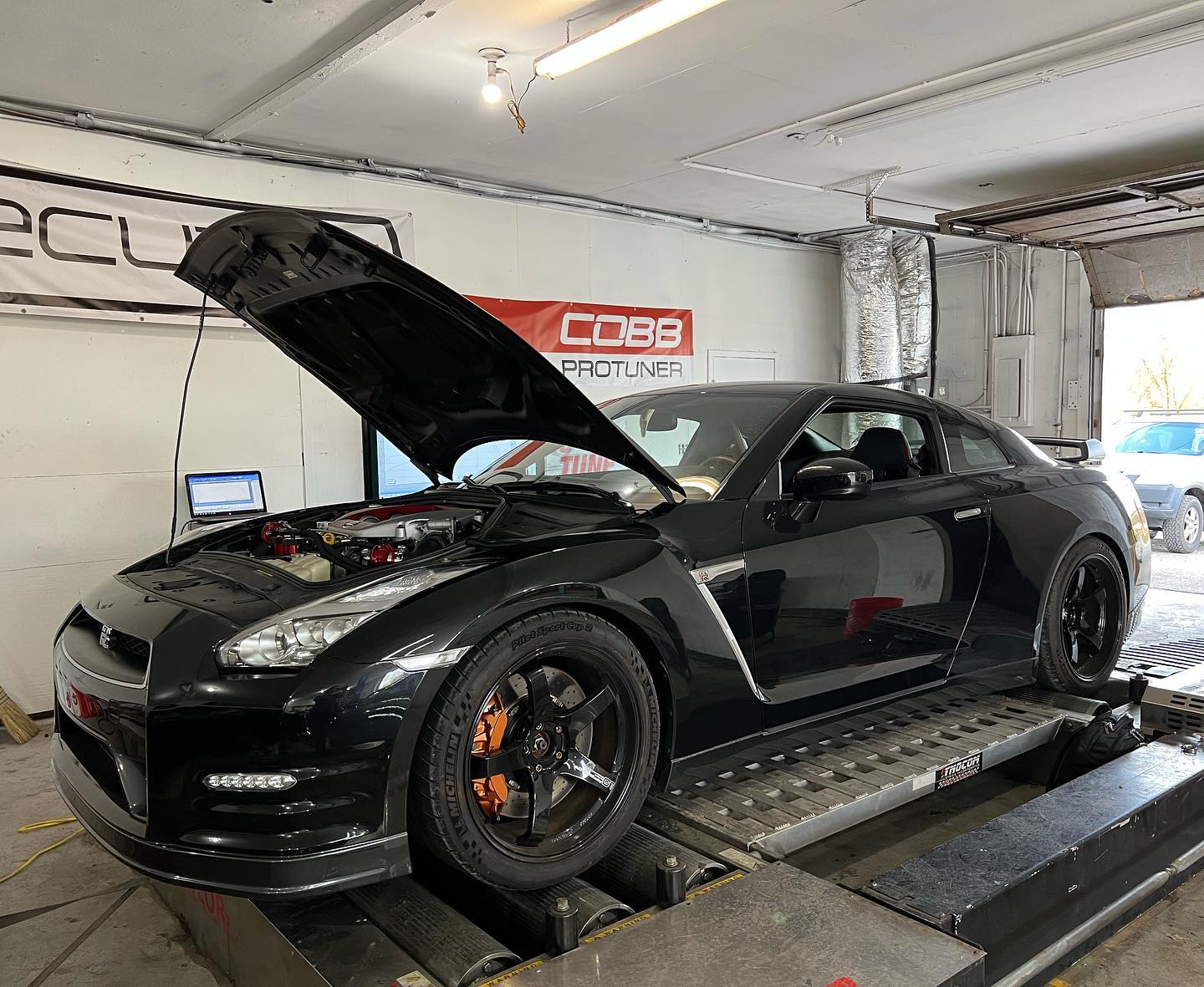
If you're ready to stop guessing about your calibration, Taylor'd Tuning can help. We offer track-proven AWD and hub dyno tuning, support for HP Tuners, Cobb, ECUTEK, Motec, and Haltech, and honest guidance on which parts your build actually needs.
Frequently Asked Questions
Does performance engine tuning reduce reliability?
It can, but the outcome depends on how the calibration is built. A tune that pushes boost pressure and ignition timing past safe margins, ignores knock, or runs lean under load adds engine stress and wear. A reliability-first calibration keeps air-fuel ratio and timing inside conservative limits, logs sensor readings, and validates on a dyno and the road. Done that way, tuning often improves drivability and fuel economy without measurably shortening engine longevity.
What should a tuner check before tuning an engine?
A pre-tune health check should cover compression or leak-down results, spark plug condition and gap, fuel trims, intake and exhaust leaks, cooling system pressure, and the condition of any recent modifications. The tuner also needs to confirm which ECU and car tuner software platform the car runs and whether the fuel quality in your area matches the octane the calibration assumes. Skipping this step is how a clean pull turns into detonation on the dyno.
Does dyno tuning make a car more reliable than a mail-in tune?
Dyno tuning measures power output and engine load in a controlled setting, so the tuner can watch air-fuel ratio, knock, and boost pressure in real time and adjust safety margins on the spot. A mail-in remote tune relies on data logs you collect yourself, which works well when the logs are clean. The reliability difference comes from calibration transparency and validation, not the dyno itself, which is why a staged workflow with data logging matters on both paths.
Does a stage 1 tune decrease reliability?
A stage 1 tune on a stock or lightly modified car usually stays within the hardware's safe range, so the reliability impact is small when the calibration respects fuel quality and heat management. Problems appear when a stage 1 map is generic, assumes 93 octane while you fill 91, or ignores intake and cooling limits. Ask what safety margins the tuner built in and whether the tune was validated with data logs before you commit.
